

At African Infotech, we are proud to be the climbing ladder for the technicians and professionals of tomorrow. We are known for the courses we offer for upgrading working professionals and freshers' theoretical knowledge and practical skills.

The plumbing design course from African Infotech equips participants with skills for efficient plumbing design planning. Plumbing classes teach you to become a skilled plumbing design engineer through real-world projects and help you become successful in your career. Join the course to prepare yourself to master the art of plumbing design.
Plumbing design is important for ensuring a safe water supply, efficient waste removal, and the prevention of structural damage. The plumbing program covers all topics from basics to advanced, including preparation of plumbing layouts, sizing and selection of pipes, and developing isometric drawings. The course also provides competency to use relevant software like AutoCAD and Revit.
Plumbing engineer training includes the following topics:
Understand the components of plumbing systems, including pipes, fittings, valves, pumps, storage tanks, and fixtures.
Have an overview of local, national, and international plumbing design codes and standards, plumbing drawings and symbols, and basic terminology.
Study the various plumbing materials and their applications. Know the sustainable plumbing practices and water conservation strategies.
Have a basic understanding of water supply, sanitary drainage, and stormwater drainage systems.
Become familiar with the different sources of water supply and various water supply systems. Know the plumbing fixtures used for water supply systems.
Understand the pipe sizing methods and how to use them. Know the water storage systems such as underground and overhead tanks. Find out how to size them.
Find out how to calculate pressure loss, select pipe materials, route pipes, and calculate friction loss in pipes. Learn about water pressure management.
Study how to make pump head calculations, design pump room layouts, and create a water distribution layout design. Learn about software-based designing.
Practical training in pipe sizing, pump selection, and water supply design
Have an overview of drainage systems, types of sanitary fixtures, and drainage fixture units. Understand drainage systems such as sanitary, vent, and waste systems.
Find out how to design soil pipes, waste pipes, branch drains, cleanouts, and building drains for a sanitary drainage design.
Learn the steps in vent system design, including vent pipe sizing, trap seal protection, and location of vent terminals.
Study in detail about manhole spacing, sewage collection, sewage disposal, the components of the drainage system, and coordination with other services.
Understand software-based drainage design and get practical training in drainage system design.
Know the fundamentals, codes, standards, types, and importance of stormwater drainage. Find out how to calculate stormwater load, catchment area, roof drainage, and runoff.
Find out how to design a roof drainage system, including gutter design, scupper design, downpipe design, and pipe sizing.
Learn the steps involved in surface drainage, such as the design of open drains, trench drains, catch drains, area drains, and grading slopes.
Study the design of stormwater pipe network, including horizontal drainage layout, pipe sizing, pipe material selection, and hydraulic capacity checks.
Understand sustainable stormwater management, stormwater storage, stormwater disposal, stormwater drawings, and software-based design.
Have an overview of plumbing riser diagrams and the types. Find out how to read and interpret riser diagrams.
Understand the various water supply riser diagrams, such as cold water riser layout, hot water riser layout, hot water return riser, and pressure zoning.
Study the different sanitary drainage riser diagrams, like soil stack layout, waste stack layout, and vent stack layout.
Learn about stormwater riser diagrams, including roof drain connections, rainwater downpipes, stormwater stack layout, and surface drainage connections.
Find out how to prepare for riser diagrams and how to create diagrams using the relevant software.
Understand water quality parameters like pH, TDS, hardness, etc, used to analyze water quality. Have an overview of water sampling,
Find out how to read and interpret water analysis reports, select a water treatment process, calculate the capacity of a water treatment plant, and size a storage tank.
Learn how to design a multimedia filter, activated carbon filter, and cartridge filter. Study the design of a water treatment plant, water softener, reverse osmosis system, and disinfection system.
Understand the handling of instruments like a flow meter, pressure gauge, level sensor, control valve, and water quality sensor.
Practical session
Study how to use AutoCAD for plumbing design
Have an overview of Revit MEP for plumbing design
Learn how to make pipe sizing, analyze pressure loss, and make flow calculations using software tools
Find out how to collaborate on the project and check errors
Hands-on training
Key Skills Gained
After completing plumbing design classes, you will get skills in plumbing systems design, pipe sizing, pump selection, riser diagrams, and hydraulic calculations.
Software Proficiency with HVAC design classes
Plumbing engineering courses will make you proficient in software tools such as AutoCAD, Revit MEP, and Navisworks.
Career Advancements
Plumber education and training ensure career advancement and a better salary globally.
On completion of plumbing training programs, you can pursue a wide range of roles, including plumbing design engineer, project engineer, estimation engineer, plumbing project coordinator, MEP engineer, BIM modeler, and CAD designer. The industries hiring professionals who have completed a plumbing certification course include MEP, construction, infrastructure, manufacturing, and real estate.
The course can be attended by construction professionals, civil engineers, mechanical engineers, design engineers, and site engineers who want to upskill their knowledge in plumbing design. Students and fresh graduates who are interested in gaining practical skills can attend the course. There are no strict prerequisites to join plumbing training programs in a recognized plumbers' training institute.
African Infotech is a leading institute popular for its short-term technical courses designed to upskill working professionals. You should join it for the plumbing engineering course because of its:
 Comprehensive syllabus including all concepts from basics and hands-on training Flexible schedules like online and weekend classes to suit working professionals Experienced faculty providing the best training Affordable fee structure A globally-recogmized certificate improving job prospects globally
 Join our plumbing design course to develop practical skills and climb up the ladder of success in your career.
The admission process is simple. Fill out the details in the online application form available on the official website. If you have any queries, the support team is ready to guide you anytime and anywhere.
People choose African Infotech because of
Practical training with real-world projects Software training to stay updated in the design and construction industry Career guidance and placement assistance to help the candidates launch their career Competitive fee structure despite the best training provided Post-training support Answer :The topics included in the program are plumbing systems design, pipe sizing, pump selection, riser diagrams, and hydraulic calculations. Software training is also included.
Answer :Yes, it is suitable for beginners because the course starts with the fundamentals and gradually move towards the advanced topics. So, freshers too can join the course.
Answer :Plumbing certification proves your skills in plumbing design. It improves your job opportunities, increases earning potential, and provides job security
Answer :Yes, you will receive a certificate after completing the plumbing course, which has global recognition and shows you are industry-ready.
Answer :The career opportunities after plumbing certification include plumbing design engineer, project engineer, estimation engineer, plumbing project coordinator, MEP engineer, BIM modeler, and CAD designer.
Answer :Yes, civil and mechanical engineers who want to specialize in MEP projects and create plumbing designs can join plumbing training.
Answer :Drainage system design refers to the designing of sanitary drainage systems, wastewater drainage systems, and stormwater drainage systems after making the essential calculations and using the appropriate software.
(05)
(04)
(03)
(02)
(01)
We are happy to help you 24/7


With great opportunities for career advancement, increased chances of employability, a hike in salary, and job security, the HVAC design course is a great option for individuals in the construction, mechanical, and HVAC industries. Play a significant role in energy saving and improving indoor comfort with our HVAC design course.

You can gain industry-relevant skills in designing electrical systems with our electrical design training course, which covers all aspects. Designed for electrical engineers and technicians, the course will boost your technical skills and software proficiency required for the field. Join our electrical design course to get hands-on training and take your career to new heights.
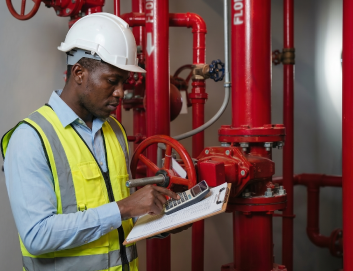
Understand how to identify fire hazards, minimize the risk of fire, and protect property and lives with our firefighting course. Contribute proudly and confidently to a safer environment by gaining practical training in fire prevention and extinguishing. Enroll in the firefighting course and become a firefighting hero, enhancing the safety of residences, workplaces, and the public.
At African Infotech, we are proud to be the climbing ladder for the technicians and professionals of tomorrow. We are known for the courses we offer for upgrading working professionals and freshers' theoretical knowledge and practical skills.

The trainers were amazing. They explained the concepts very clearly. I could easily understand even the complex topics. Thanks to them, I am confident that I can create efficient plumbing designs
I am a fresher with no previous experience, but the certificate added a lot of weightage to my resume. So, I was able to land a good job in a top plumbing contract company.
I am a BIM modeler. After completing the course, my team manager was impressed with my performance. It helped me to move ahead in my career. I would recommend it to BIM professionals who want to enhance their skills.